For Indian homeowners in Delhi NCR, the kitchen is far more than a place to heat meals; it is a high-traffic zone designed for heavy-duty cooking, spice-heavy prep, and frequent use of wet-grinders or pressure cookers. When deciding between an L-shaped and a parallel kitchen layout, the choice often hinges on the unique demands of the Indian culinary process. L-shaped kitchens are popular for their ability to integrate a dining table or open up a small floor plan, while parallel kitchens offer the most efficient 'golden triangle' workflow for active cooks. Generally, a parallel layout works better for compact 1BHK or 2BHK units where wall-to-wall space is limited, whereas an L-shaped layout excels in square-shaped rooms that require corner optimization and additional movement space.
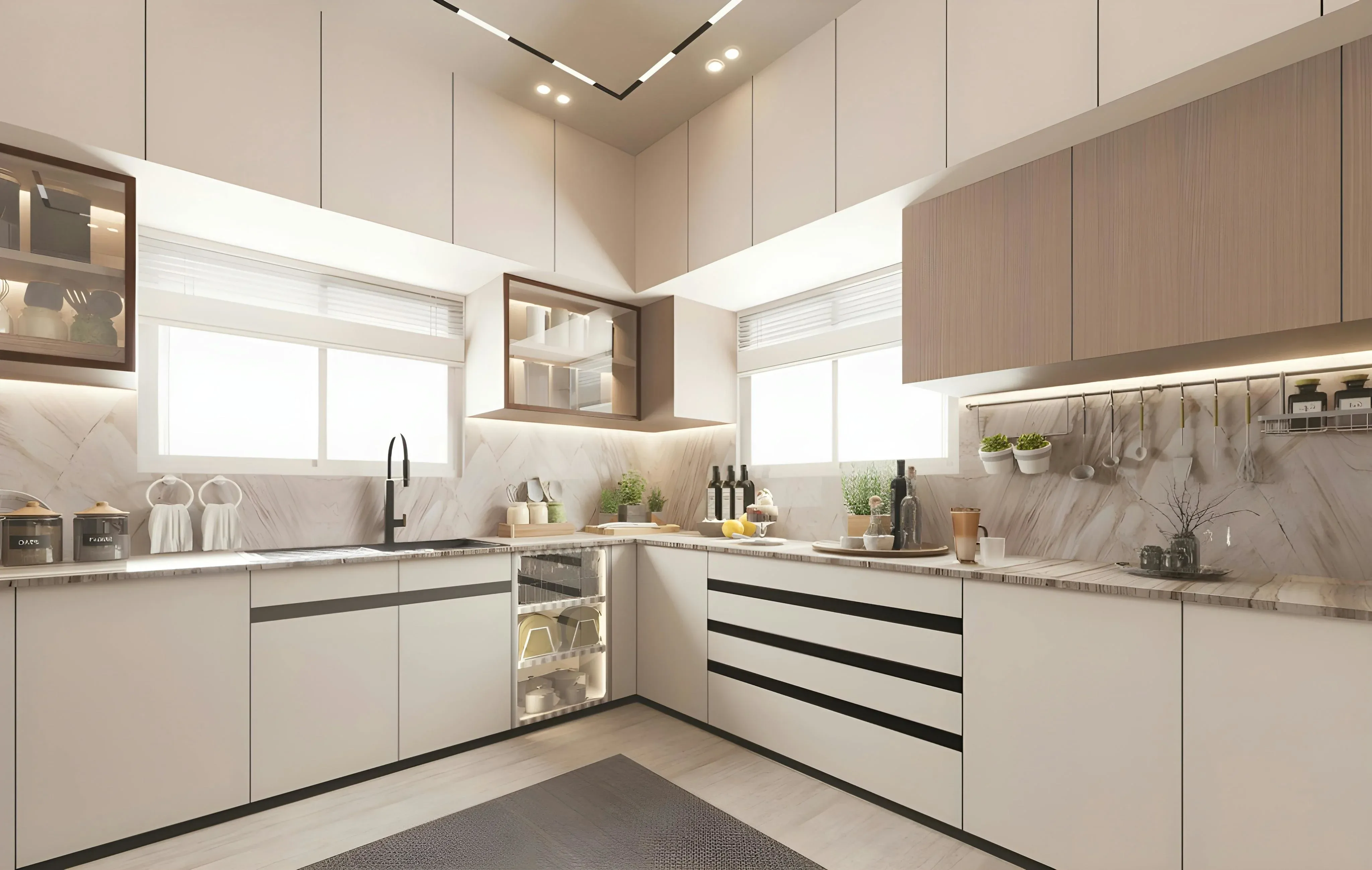
The fundamental difference lies in the 'work triangle' and physical dimensions. A parallel kitchen consists of two long, facing platforms, usually set about 3 to 4 feet apart. This is ideal for Indian homes because it separates the wet zone (sink) from the dry zone (stove), preventing cross-contamination and clutter. In a standard 2BHK Delhi apartment, a 10-foot parallel layout provides massive counter space. Conversely, the L-shaped layout utilizes two adjacent walls, meeting at a corner. While this layout is visually expansive, the 'dead corner' can become a storage nightmare if not fitted with high-end mechanisms like magic corners or tandem pulls. For Indian cooking, where deep-vessel storage is common, the L-shaped layout provides longer continuous counter runs, which are helpful when rolling out multiple rotis or preparing large-scale tiffin boxes.
Cost remains a primary driver for many homeowners in the capital region. Parallel kitchens are often slightly more economical because they avoid complex corner cabinetry. A standard 10x10 modular kitchen in Delhi using BWP plywood and laminate typically ranges from ₹1.5L to ₹3L, depending on the hardware brand and finishing. An L-shaped kitchen requires specialized corner hardware—which can add ₹15,000 to ₹25,000 to the total cost. If you are on a strict budget for your 1BHK renovation, a simple parallel layout allows you to allocate more funds toward higher-grade shutters like acrylic or PU finish instead of spending on intricate corner carousels. Always account for chimney ducting costs; parallel kitchens often allow for shorter, more direct ducting routes, which is more cost-effective than routing pipework around a corner wall.
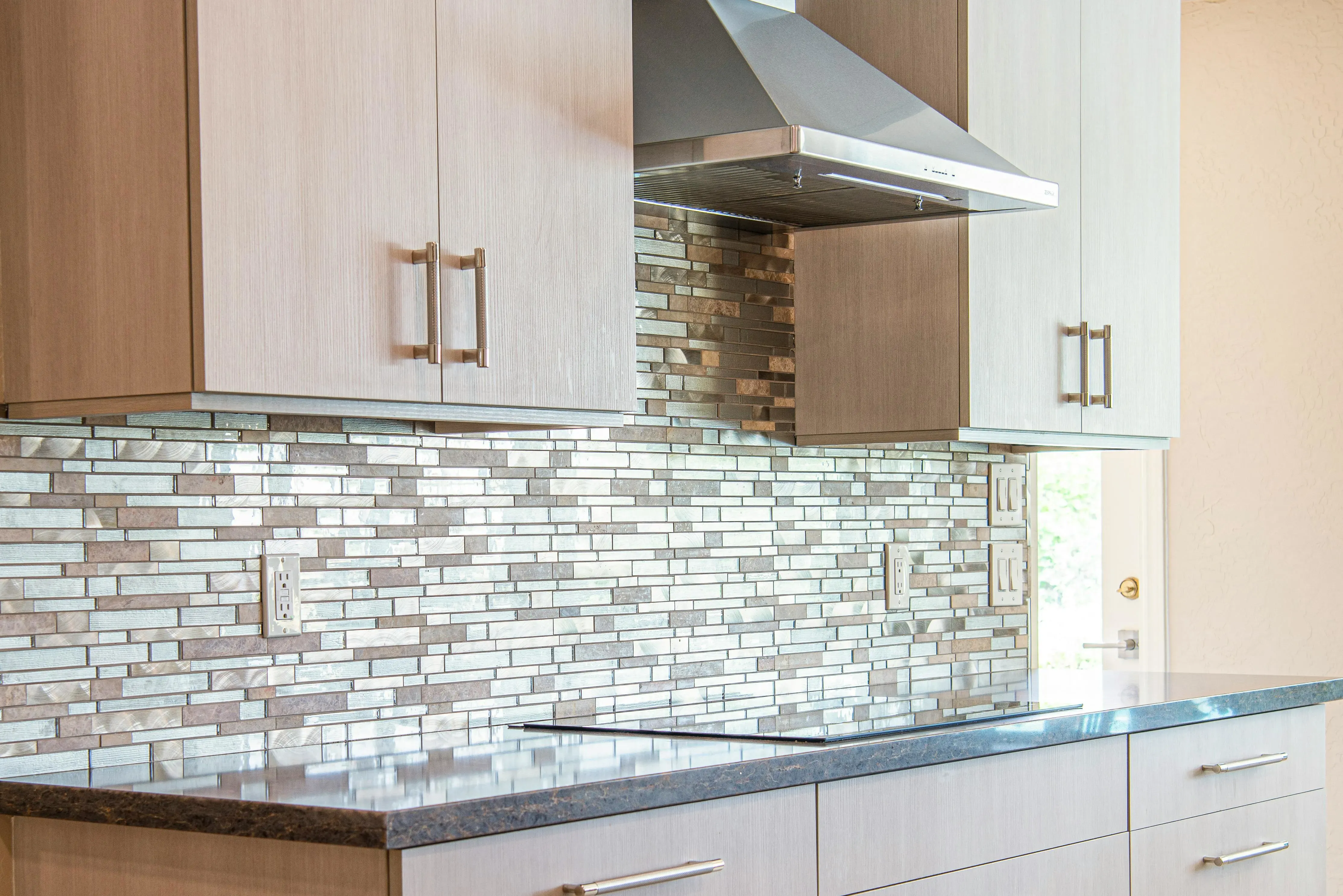
Chimney placement is a critical but often overlooked factor in Indian kitchens. Because Indian cooking involves heavy tempering (tadka) and high-heat sautéing, grease accumulates rapidly. In a parallel kitchen, your chimney and hob should ideally be on one side, with your fridge and sink on the other to minimize heat transfer. In an L-shaped layout, the chimney is often placed at the center of one of the runs, which provides a more balanced aesthetic but requires careful planning to ensure the chimney duct doesn't conflict with upper cabinet storage. Regardless of the layout, ensure the platform depth is at least 24 inches (600mm) to accommodate standard Indian appliance footprints and keep the stove at a safe distance from upper cabinets to prevent heat damage.
A common mistake Indian buyers make is prioritizing aesthetics over the 'Golden Triangle' rule. Many opt for L-shaped kitchens purely for the look of open space, only to find that the distance between the sink, fridge, and stove creates an inefficient workflow that adds unnecessary steps to their daily routine. For the heavy-duty cook, the shorter the distance between these three points, the faster the meal prep. If you have a small kitchen, do not force an L-shape if the aisle width ends up being less than 3.5 feet. A cramped L-shaped kitchen feels much smaller than a well-organized, parallel layout where you have breathing room between the two counters. Always map out your routine—if you are a solo cook, L-shapes are fine; if you share your kitchen space, the parallel layout prevents collisions.
Selecting the right vendor is just as important as the layout. In the Delhi NCR market, verify that your fabricator is using 710-grade BWP plywood and high-quality hardware like Hettich or Blum. Whether you choose parallel or L-shaped, ensure that your drawers have soft-close hinges, as these are exposed to high usage frequencies. Take time to measure your vessel sizes; Indian kitchens often require tall drawers for pressure cookers and spice containers. Before finalizing, ask for a 3D render that accounts for the specific width of your walkway. A layout that looks functional on paper may feel tight in person if the clearance isn't calculated correctly. Focus on utility first, then refine the material choices and finishes to match your home's aesthetic.